

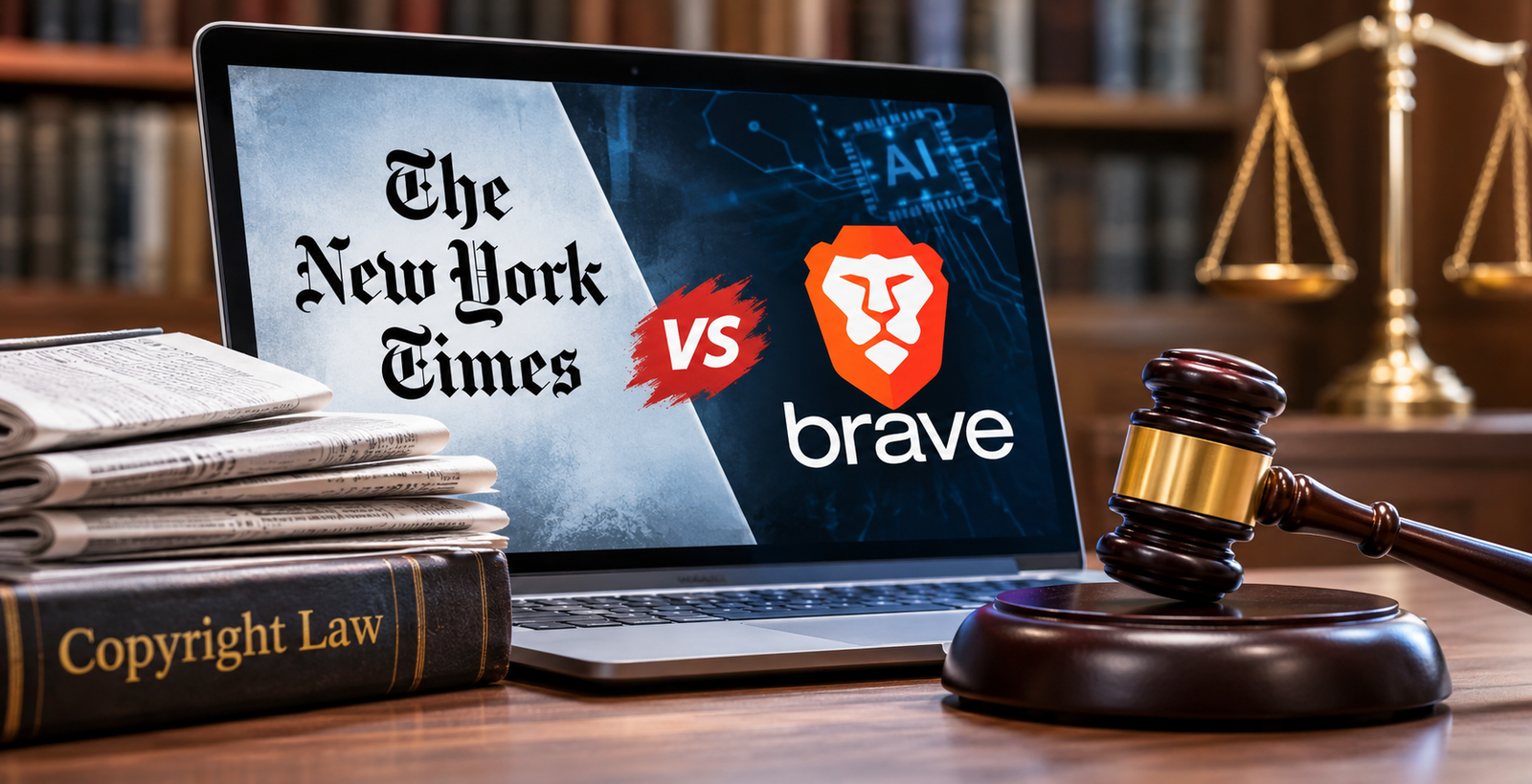
The growing conflict between traditional news publishers and artificial intelligence companies has reached another major stage. The New York Times and three other American newspaper publishers have filed lawsuits against Brave Software, accusing the technology company of using copyrighted news content without permission and making that material available to AI businesses.
The legal action, filed in Manhattan federal court on November 2, 2026, raises important questions about how search engines and AI-powered services collect, process, and distribute online information.
The New York Times filed a separate complaint, while the New York Daily News, Chicago Tribune, and Orlando Sentinel joined another lawsuit against Brave. Both cases focus on allegations involving copyrighted journalism, AI-related services, and the company’s web search technology.
Why Are Newspaper Publishers Suing Brave Software?
At the center of the dispute is how Brave allegedly collects news articles and makes their content available to other businesses.
According to the New York Times, Brave has copied articles published by major news organizations and provided access to that material through its search products and services used by AI developers.
The newspaper argues that its journalism has commercial value and should not be collected, reproduced, or distributed without proper authorization.
The lawsuit also names several AI companies, including Anthropic, Perplexity, Mistral, xAI, and Cohere, in connection with Brave’s content distribution activities. These companies are mentioned in the allegations, but they are not defendants in the two Brave lawsuits.
The publishers believe that distributing their reporting through AI services could reduce visits to their websites and affect their subscription and advertising income.
However, these claims have not yet been established in court.
Allegations About Brave’s Search Index and Web Crawling
One of the major issues raised in the complaints concerns Brave’s search index.
Search engines use automated programs called web crawlers to discover websites, collect information, and organize online pages so users can find them through search results.
Brave operates its own search index, which the publishers allege contains information collected from more than 30 billion web pages.
The New York Times claims that Brave used a crawler that did not properly identify itself, making it difficult for publishers to recognize and block its activity.
The newspaper argues that this approach allowed Brave to collect copyrighted material without obtaining the necessary permission.
This raises an important question for website owners and publishers: how much control should they have over automated systems that access their content?
While crawling publicly accessible websites is a common part of search engine operations, the legal questions become more complicated when copyrighted articles are copied, stored, or redistributed through commercial products.
The court will need to consider these issues as the cases move forward.
How Brave’s AI Services Became Part of the Dispute
The lawsuits do not focus only on traditional search engine operations. They also challenge the way Brave makes online information available through its AI-related products.
Brave offers search technology and services that developers can use to retrieve information from the web.
Its Brave Search API provides access to search results and related content. The company also offers Ask Brave, an AI-powered feature that generates responses using information gathered from online sources.
According to the publishers, these services can provide substantial portions of copyrighted articles instead of directing readers to the original publications.
The complaints describe examples in which Brave’s AI service allegedly reproduced large sections of newspaper articles in response to user requests.
The publishers argue that providing this information through AI-generated responses can reduce the need for readers to visit the original websites.
This is particularly concerning for newspapers that depend on website traffic, paid subscriptions, and advertising to support their journalism.
The Lawsuit Also Challenges Brave’s Paywall Blocking Feature
Another important part of the legal dispute involves Brave’s browser and its approach to website advertisements and subscription restrictions.
Many established newspapers use paywalls to limit access to premium articles. Readers may need to register or purchase a subscription before viewing the complete content.
The New York Times claims that certain Brave browser features allow users to get around these restrictions.
The newspaper also objects to Brave’s advertising practices, alleging that the browser blocks advertisements placed by publishers while allowing Brave to display its own advertising.
From the publishers’ perspective, this creates an additional financial problem. They argue that their original content attracts readers, but Brave benefits from providing access to that material while potentially removing the advertising revenue that supports its production.
The complaint therefore raises questions about both copyright protection and the business models used by online publishers.
Brave’s position and legal response will be important in determining how these allegations are addressed.
What Could This Lawsuit Mean for AI Companies?
The dispute could have consequences beyond Brave Software.
Artificial intelligence companies increasingly depend on online information to provide accurate and relevant answers. Some systems use information collected during model training, while others retrieve current web content when responding to individual questions.
These approaches involve different technical processes and can raise different copyright questions.
For example, collecting an article to build a search index is not necessarily the same activity as using its text to train an AI model. Similarly, retrieving information to answer a user’s question is different from reproducing an entire copyrighted article.
The legal treatment of each activity depends on the circumstances, applicable copyright rules, and whether the relevant use is authorized or otherwise legally permitted.
Publishers are increasingly challenging technology companies over these practices because they believe their original reporting should not become a free commercial resource for third parties.
The Brave lawsuits add another dimension to this debate by targeting a company that provides search infrastructure and content access to other technology businesses.
A Growing Legal Battle Between Publishers and AI Developers
The dispute involving Brave is part of a wider series of copyright disagreements between news organizations and technology companies.
The New York Times has previously taken legal action against AI companies over the alleged use of its journalism in artificial intelligence products.
Other publishers have also explored licensing agreements and legal options to protect their content.
At the same time, technology companies are developing commercial arrangements that allow AI services to access selected news content through authorized partnerships.
These agreements could provide publishers with another source of revenue while giving AI developers access to reliable information.
However, not every company has reached an agreement with every publisher. This leaves important questions about content ownership, licensing, fair use, and the responsibilities of companies that collect online information.
The outcome of the Brave cases could help clarify some of these issues, although a final decision would not automatically settle every copyright dispute involving AI.
What Happens Next in the Brave Copyright Cases?
The two lawsuits were filed in the United States District Court for the Southern District of New York.
The New York Times is seeking financial compensation and a court order to stop the activities it considers unlawful. The other publishers are pursuing similar legal remedies in their separate complaint.
Brave had not publicly responded to the specific allegations in the initial reports about the filings.
At this stage, the accusations remain claims made by the publishers. No court has determined whether Brave violated copyright law or whether its challenged business practices were unlawful.
The next stages of the legal proceedings will provide an opportunity for both sides to present their arguments and supporting evidence.
Final Thoughts
The lawsuits against Brave highlight a growing challenge for the technology and publishing industries.
AI companies need access to online information to develop useful products, but news organizations argue that their reporting should not be copied and commercially distributed without appropriate permission.
The disagreement is not simply about search engines or AI-generated answers. It also concerns how original journalism is valued and how publishers can protect their work in an increasingly automated digital environment.
As artificial intelligence continues to change the way people access information, legal decisions involving companies like Brave could influence future relationships between publishers, search platforms, and AI developers.
Sources for further reading: